
PKN and HRNS Partners Convene in Kiboga for Cross-Border Learning Exchange on conservation and biodiversity plus integration of conservation into coffee production
By Joan Nanteza
Partners of PKN and HRNS from Uganda and Tanzania concluded a three-day joint learning exchange and field workshop in Kiboga District, aimed at strengthening collaboration, sharing knowledge and identifying practical approaches to environmental conservation and sustainable community development.
The exchange brought together representatives of various organizations working on environmental protection, agriculture and community development to share experiences, build mutual awareness and identify synergies for more effective collaboration.
The event was hosted by the National Association of Professional Environmentalists (NAPE) and the African Institute for Biodiversity and Sustainability (AIBIS) was supported by PKN and HRN from Germany.
Participating organizations included NAPE, HRN-TZ, HRN-UG, TaLRO, Nature-TZ, HUDEFO, MTAWADA, Mazingira Plus, Wild Nature Institute, AIBIS, PAICHO and Vijana Corps.
The three-day engagement combined discussions and practical field visits, giving participants an opportunity to move beyond theoretical knowledge and learn directly from community experiences and ongoing initiatives.
The delegation visited an exhibition and toured the AIBIS farm in Kyankwanzi District. The visit provided an opportunity for participants to observe activities on the ground, exchange practical ideas and explore approaches that could be adapted within their respective organizations and communities.
Participants interacted with smallholder farmers to learn about their experiences, farming practices and approaches to addressing challenges affecting agricultural production and environmental sustainability.
The field engagements were intended to strengthen participants’ understanding of local realities and connect lessons from community initiatives with their organizations’ work.
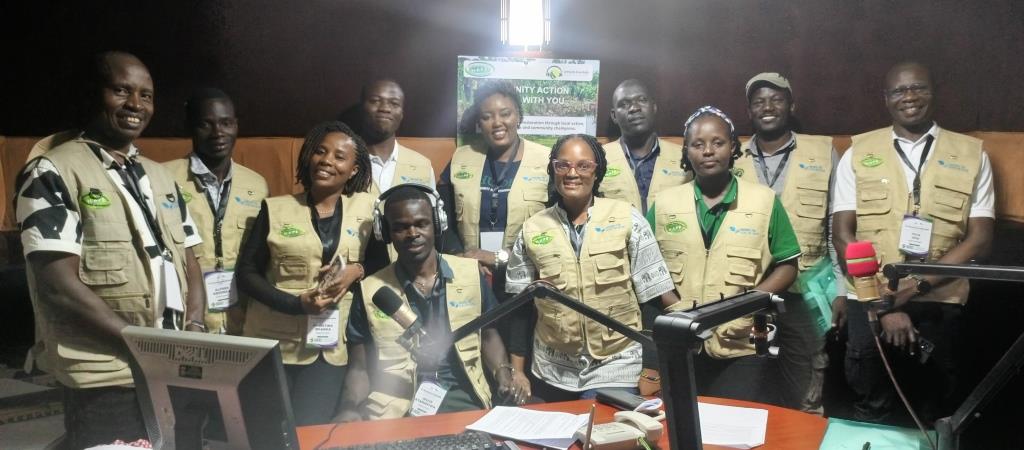
Participants visited Community Green Radio in Kiboga District, where they toured the station and took part in a live radio talk show focusing on climate change and its causes.
The radio discussion provided a platform to share information about climate change, examine factors contributing to the problem and highlight the importance of public awareness and community participation in environmental protection.
The visit also offered participants an opportunity to appreciate the role of community media in communicating environmental issues, amplifying community voices and encouraging people to take part in addressing climate-related challenges.
Through these engagements, participants had an opportunity to learn about each other’s work, reflect on experiences from Uganda and Tanzania, and explore opportunities for collaboration that could strengthen future interventions.
The participation of organizations from the two countries also created space for cross-border learning, recognizing that environmental challenges and sustainable development concerns often require shared knowledge, coordinated efforts and solutions informed by local experiences.
As environmental pressures continue to affect communities and livelihoods, such learning exchanges provide an opportunity for organizations to strengthen their approaches by drawing lessons from the experiences of others and identifying practical solutions that respond to community needs.
The three-day engagement underscored the importance of learning from communities, sharing practical experiences and building synergies among organizations as essential steps towards more effective and sustainable development initiatives.